Hypholoma fasciculare
Sulphur tuft · Clustered woodlover
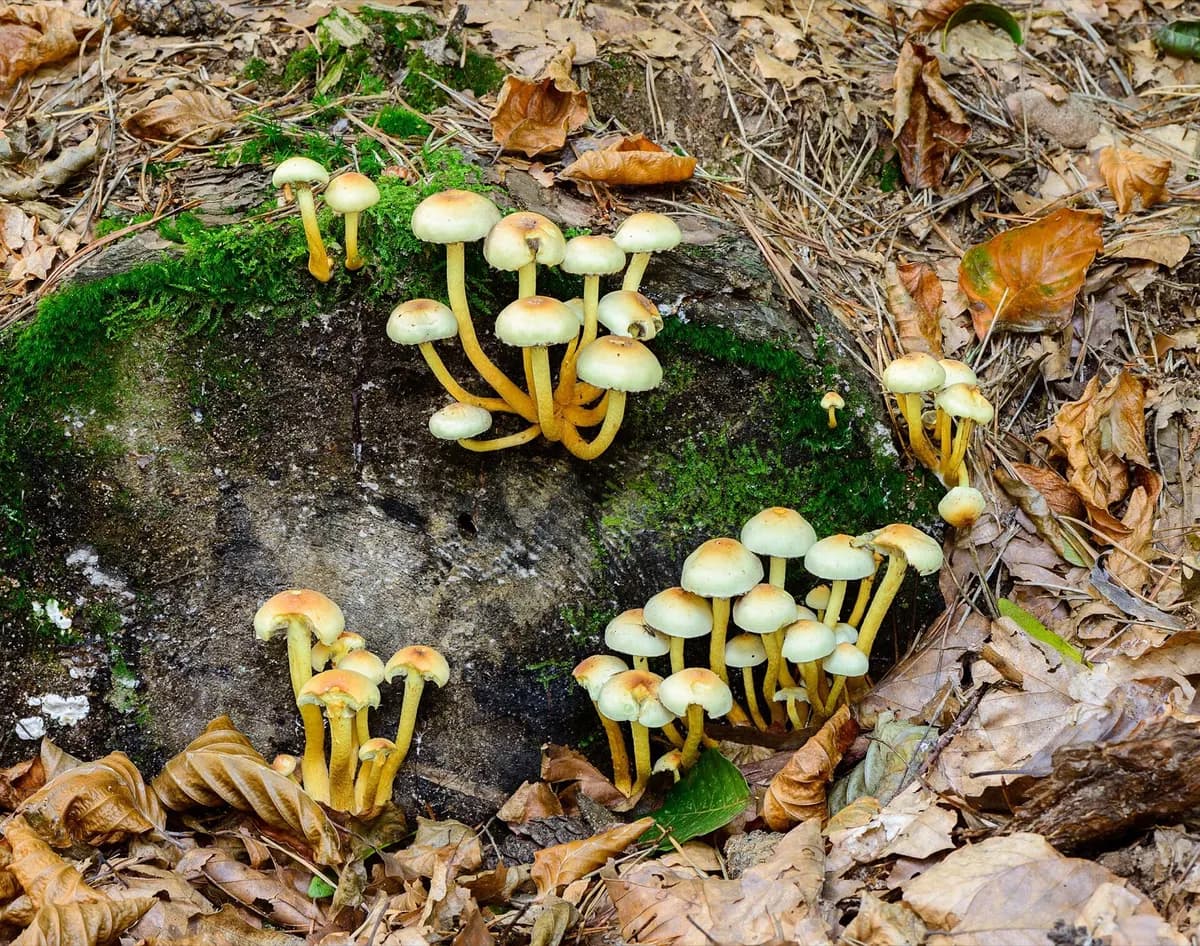
Grows in dense clusters on stumps and wood chips, in the same habitat and season as P. cyanescens, and its bright sulphur-yellow to greenish colouring is nothing like a Psilocybe. Included mainly because it is abundant in the same beds and gets collected by accident in a mixed handful.
What it does
- Toxin
- Fasciculol steroids and related compounds.
- Time to symptoms
- Within a few hours.
- Outcome
- Severe vomiting and diarrhoea, occasionally with liver enzyme disturbance. Rarely fatal but thoroughly unpleasant. Intensely bitter, so most people spit it out.
Decisive characters
Each of these settles the question on its own. If one says no, the answer is no, regardless of what everything else says.
Colour
Psilocybin speciesCaramel to chestnut brown, drying pale
Look-alikeBright sulphur-yellow to yellow-green cap, greenish-yellow gills
Taste
Psilocybin speciesMild, farinaceous
Look-alikeIntensely, immediately bitter
Bruising
Psilocybin speciesBlue
Look-alikeNo blue reaction
Supporting characters
Useful corroboration. Not sufficient alone.
Spore print
Psilocybin speciesDark purple-brown
Look-alikePurple-brown as well. This one does NOT separate them
Confused with
Other look-alikes to know
Other mushrooms that get mistaken for the same psilocybin species. Learn the decisive characters for each, and see the full look-alikes guide.
Sources
- [1]Hypholoma fasciculare toxicity, Bresinsky & Besl, A Colour Atlas of Poisonous Fungi (1990)
How we research this: sources, evidence grading, review and updates.